Built on active-matrix TFT array technology — making biological experiments as flexible as writing software. Precisely manipulating nanoliter-to-microliter droplets to redefine the traditional biology lab. Through automated, fully digitized experiments, we generate massive multimodal, standardized positive/negative sample data, closing the loop from AI prediction to automated experimental validation in life-science discovery.
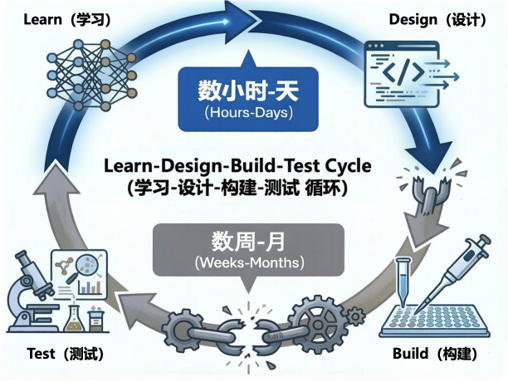
The company is dedicated to developing automated, intelligent, truly digitally closed-loop bio-AI infrastructure, addressing the pain points in the "Design-Build-Test-Learn (DBTL)" cycle of life-science discovery: traditional wet-lab biology relies on manual labor, robotics and test-tube systems, depends on expensive single-purpose instruments, and suffers from long feedback cycles, low throughput, and missing negative-sample data that cannot support efficient model training. We are building a one-stop, general-purpose biological experimentation platform.
We modularize and integrate previously separate, specialized instruments, unifying data across different experiment types. Complex reaction systems are miniaturized and dropletized, enabling precise biological reactions at the single-cell and single-bacterium level. Hundreds to thousands of biological micro-reactors are controlled independently, in parallel, and programmatically. Experiments become fully automated, unattended, and intelligent, eliminating human operational error. High-quality positive/negative multimodal data are produced at high throughput to retrain, fine-tune, and align bio-AI models, continuously improving design success rates.
Combining advanced semiconductor manufacturing processes with next-generation digital droplet microfluidics, delivering unprecedented throughput and droplet control.
Drawing on modern flat-panel display technology, active-matrix digital microfluidics enables precise movement, splitting, merging, and dispensing of tiny droplets through fine-grained electrode control — creating a Lab-on-a-Chip on a phone-screen-sized chip, where hundreds to thousands of micro-reactors (droplets) are controlled independently, in parallel, and programmatically.
Control biological workflows with a standard Python API.
Our proprietary multi-droplet, multi-operation, multi-stage integrated path-planning algorithm — purpose-built for digital microfluidic chips and backed by powerful local computing — computes droplet reaction paths in real time.
Eliminating human error with fully unattended operation — "sample in, result out" — ensuring the reliability and reproducibility of experimental data.
LLM-powered agents autonomously plan experimental steps from prompts and decide workflows on their own, enabling truly unattended automated experiments.
Unlike traditional passive PCB electrode layouts, we use thin-film transistor (TFT) processes to fabricate high-density pixelated electrodes on glass substrates, achieving display-like pixel-level control.
By energizing electrodes to create "voltage traps", droplets can be freely confined and moved — no physical microchannels required on the chip surface.
As shown, a moving ring-shaped high-voltage field precisely controls the displacement of the central droplet.
Droplets move directly on a hydrophobic surface with no channel residue, eliminating cross-contamination.
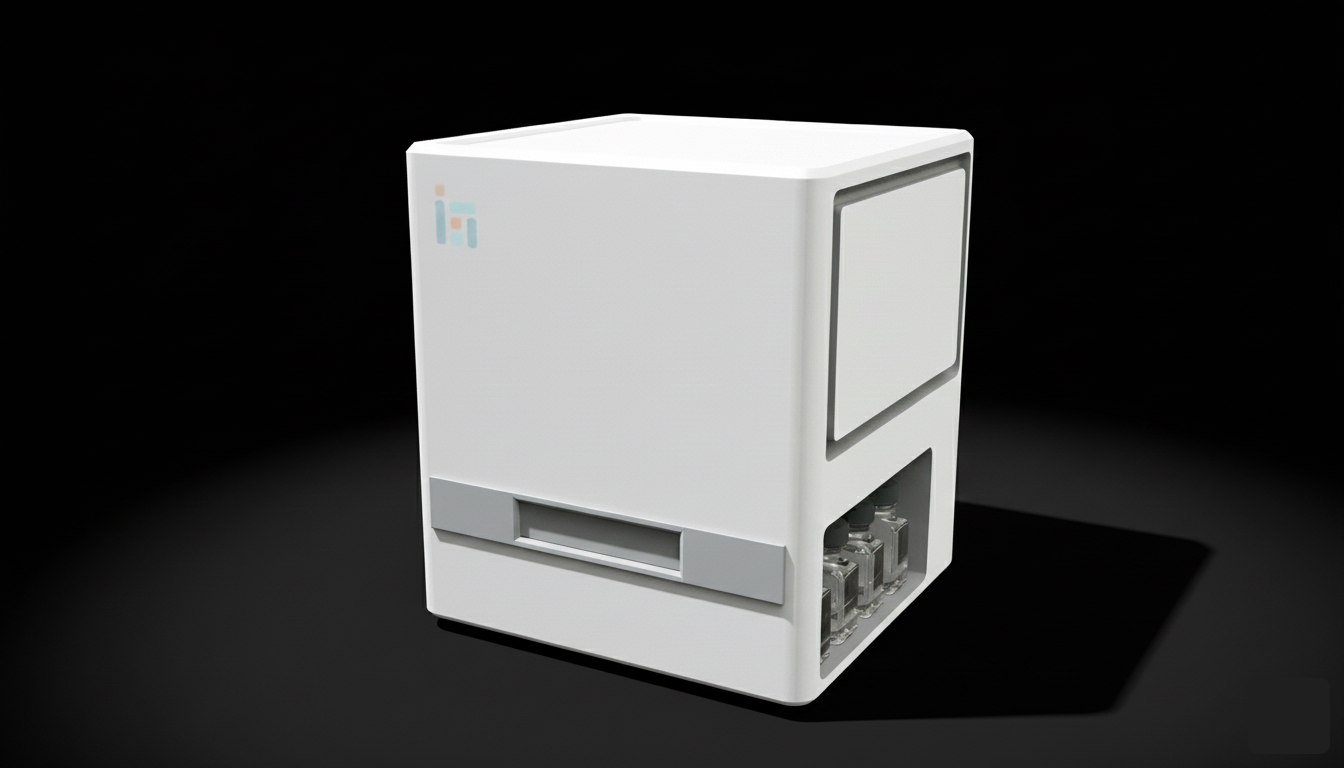
A unique desktop-scale biological experiment platform. Powered by next-generation digital microfluidic chip (BPU) technology, it precisely and flexibly controls nanoliter-to-microliter droplets on a semiconductor chip the size of a phone screen. With modular hardware design, different functional modules are invoked to perform complex biological reactions across a vast range of application scenarios.
Supports parallel and serial experiments across thousands of micro-reactors.
Cuts protein synthesis validation time from weeks to 48 hours.
Reduces reagent consumption by over 90%.
Fully digitized workflows producing massive multimodal data.
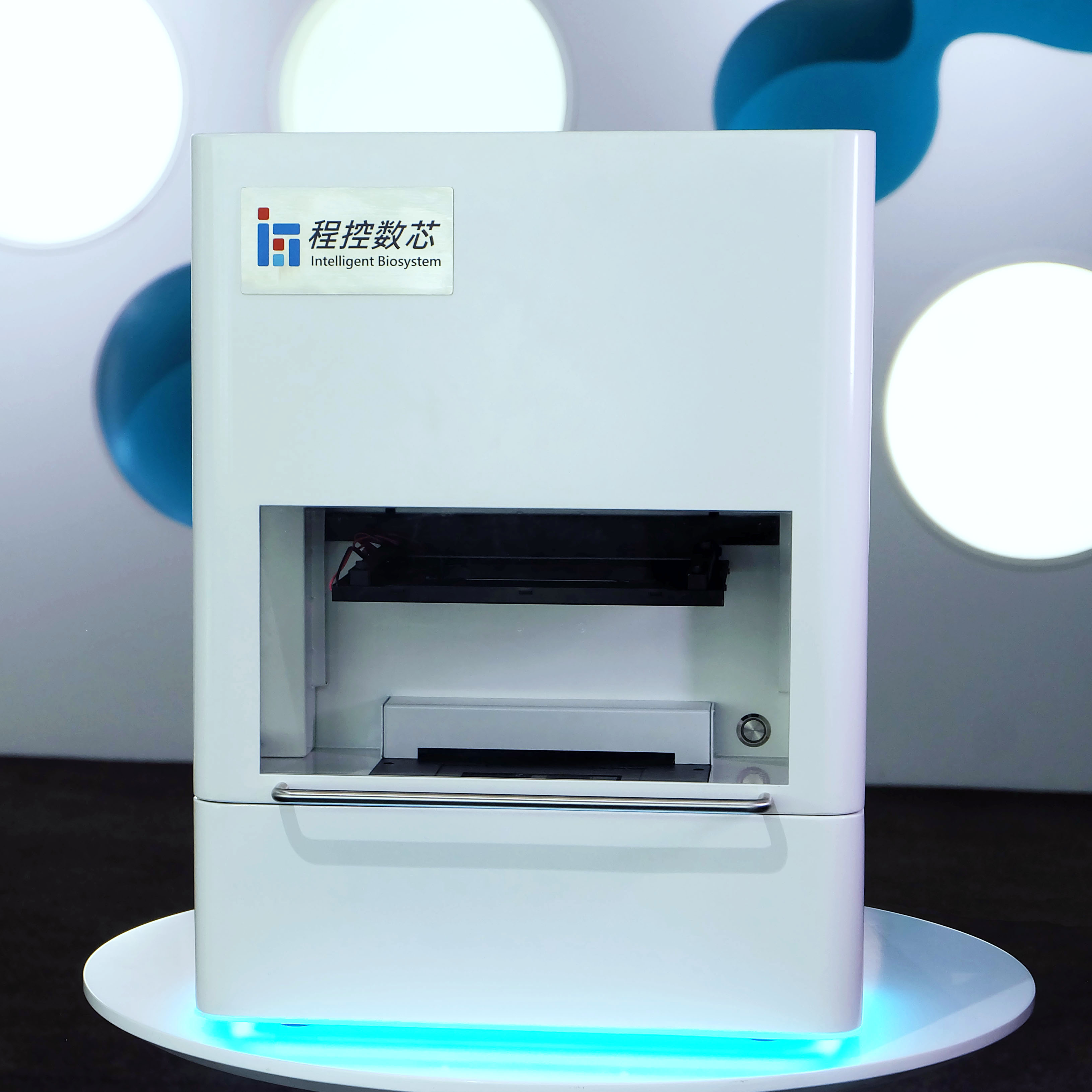
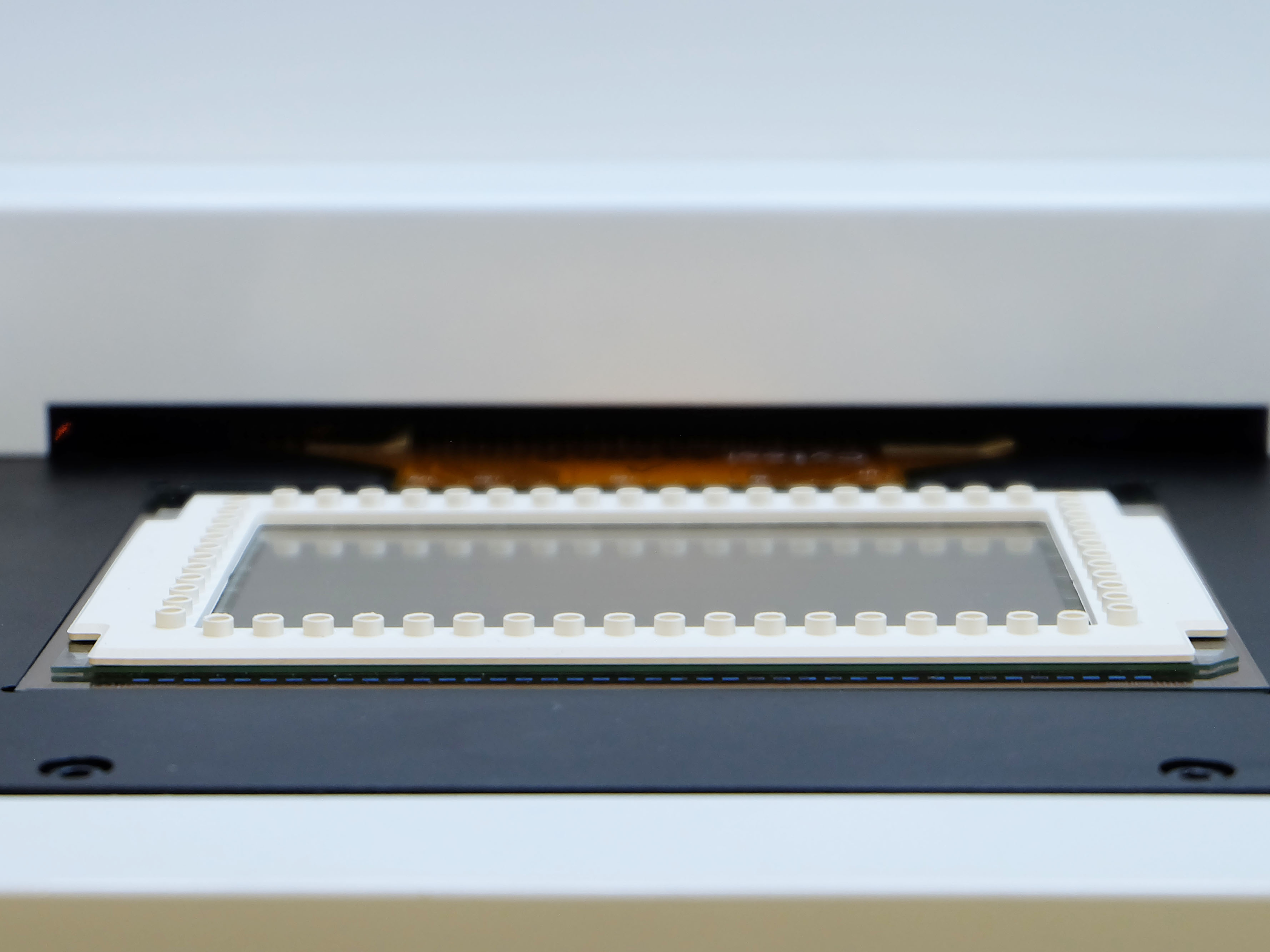
Reinventing traditional biological experiments with digital microfluidics — full automation from sample-in to result-out.
Leveraging the Turing Intelligent Biological Workstation to achieve fully automated NGS library construction — from sample processing to library output, with no manual intervention — significantly improving experimental efficiency and data consistency.
Micro-droplet reactions (0.5 µL ~ 10 µL), cutting reagent costs by over 50%.
Complex biological reactions are completed by combining magnetic, thermal, and other functional modules. Pipetting is eliminated, avoiding contamination risks from manual handling and environmental exposure.
Sample in, result out — no manual operation during the experiment, reducing human error. The fully digitized workflow generates massive experimental data.


Integrating the Turing workstation's digital microfluidic chip with advanced cell-free protein synthesis (CFPS) to build an unprecedented high-throughput, integrated "Design-Build-Test" protein expression and testing platform on a single chip.
Load linear DNA templates, CFPS reaction mix, target proteins, and detection reagents onto the chip as droplets as small as 0.5 µL.
Program-controlled mixing of DNA and CFPS droplets, incubated in designated regions, synthesizing 200–1000 different protein designs in parallel.
Synthesized protein droplets are mixed with target-protein droplets for affinity screening.
The optical detection module integrated into the chip system reads signals from each reaction unit in real time, generating massive parallel experimental data.
Using the Turing workstation's digital microfluidic chip to enable on-demand synthesis of microscale primers and probes with real-time labeling.
On-demand synthesis of microscale primers and probes with real-time labeling, flexibly responding to experimental needs.
Fully unmanned, automated operation greatly improves efficiency, reducing single-round reaction time on-chip by more than 4x.
A sealed micro-droplet reaction system isolates human and environmental contamination, ensuring synthesis quality.

Stay up to date with Intelligent Biosystem's latest partnerships, academic exchanges, and industry developments.
Using Intelligent Biosystem's Turing Intelligent Biological Workstation, Yinjia Bio successfully validated high-throughput microscale cell-free protein expression on a digital microfluidic chip, achieving efficient expression of multiple novel proteins in reaction volumes as small as 0.5 µL. This breakthrough not only significantly lowers protein synthesis costs, but also greatly shortens the closed-loop cycle of "AI-assisted protein design – high-throughput wet-lab validation – complete multimodal data feedback – protein model optimization and redesign", elevating AI-assisted protein design and synthesis to a new level.
Read more Academic TalkProfessor Wing Hung Wong, member of the U.S. National Academy of Sciences, delivered an academic talk titled "Software-Driven Experiments and Closed-Loop Learning in Quantitative Biology" at the Tsinghua Forum. He introduced a new biochip platform technology that executes wet-lab experiments through software-driven hardware, forming a true closed loop between biological experimental data and AI models — accelerating the development and value breakthroughs of bio-AI.
Read more VisitA summer internship team from Peking University's School of Life Sciences, led by Professor Liu Fenglin, visited Intelligent Biosystem to explore the "lab on a chip". Over the week-long program, students worked side by side with our researchers and engineers — from literature review and experiment design to coding and simulation — demonstrating outstanding research skills and an innovative spirit of exploration.
Read moreIntelligent Biosystem is committed to becoming a world-leading provider of general-purpose AI "lab-on-a-chip" technology with self-understanding, autonomous planning, and automated experimentation. Based on next-generation digital microfluidic chip (BPU) technology, the company independently developed the programmable biological experiment platform — the Turing Universal Intelligent Biological Workstation. Whatever your questions or needs, you are welcome to contact us. Our team will reply as soon as possible with professional solutions.
Headquarters: Herui Science & Technology Park, Binjiang District, Hangzhou, Zhejiang
R&D Center: Bio2 Innovation Center, Changping District, Beijing
BD@intebio.com.cn
HR@intebio.com.cn